
26 October 2026
Emergency Roof Repairs In Weymouth And Portland: The First Hours After A Leak Or Storm
Roof leaking or storm-damaged in Weymouth or Portland? What to do first, what a roofer can make safe straight away, what waits for dry weather, and when to call your insurer.
A slate cracks loose on a Sunday night, the wind is still howling across the bay, and there is water coming through the landing ceiling. That’s when most people go looking for an emergency roof repair in Weymouth, and it’s the worst possible moment to be working out what to do. Portland is only about four miles long, a lump of limestone joined to the mainland by Chesil Beach, and it takes the south-westerlies with nothing in the way. The Met Office uses three warning colours, yellow, amber and red, and it doesn’t take a red one to shift a ridge on an exposed roof. This post walks through the first few hours: what you can do inside, what a roofer can make safe the same day the weather allows, what has to wait for a dry spell, what it all roughly costs and where your insurer comes in.
Emergency roof repair in Weymouth is two jobs, not one
Almost every emergency job splits into two parts. First the roof is made safe, which means stopping water getting in and stopping anything falling off. Then, once the weather settles, it’s repaired properly.
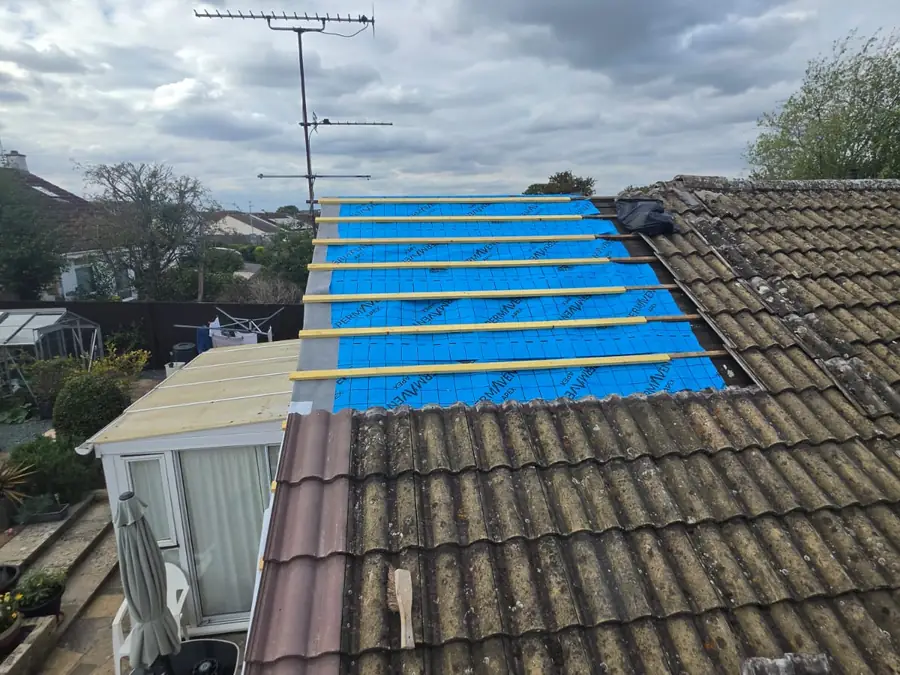
People sometimes expect both on the same visit, and occasionally that happens. A single tile knocked out of a sound roof can be replaced there and then. More often, the first visit is about buying time, and the photo above is closer to what the permanent fix looks like: a section opened up, new membrane and battens fixed, then the covering relaid on a calm day. Our roof repairs service treats leaks as priority work, and the aim on that first visit is to leave the house dry for the night.
Keeping the two parts separate in your head also helps with the money and the insurance, which we come back to further down.
Inside the house: the first hour
Start indoors, because that’s where you can actually do something useful.
Get buckets or bowls under the drips and move anything you care about out of the room: furniture, rugs, electronics, the boxes in the loft. If water is running near a light fitting, a ceiling rose or a socket, switch that circuit off at the consumer unit and leave the light switches alone. A ceiling that has started to sag with water above it can come down without warning, so keep everyone out of the room below.
If the loft hatch is easy and safe to reach, a torch will often show you where the water is coming in. Slide a tray or bucket under it and lay old towels on the joists, not on the plasterboard between them. Then take photos, lots of them, with the time on them. They’re useful to the roofer, and they’re useful to your insurer.
What not to do is go up a ladder. Wet slate is slippery, moss makes it worse, and a gust that can lift a slate can easily knock someone off a roof.
While it’s still blowing on Portland and the Weymouth seafront
Nobody should be on a roof while a gale is at its peak. That includes the roofer, and it’s the part of an emergency people find hardest to accept.
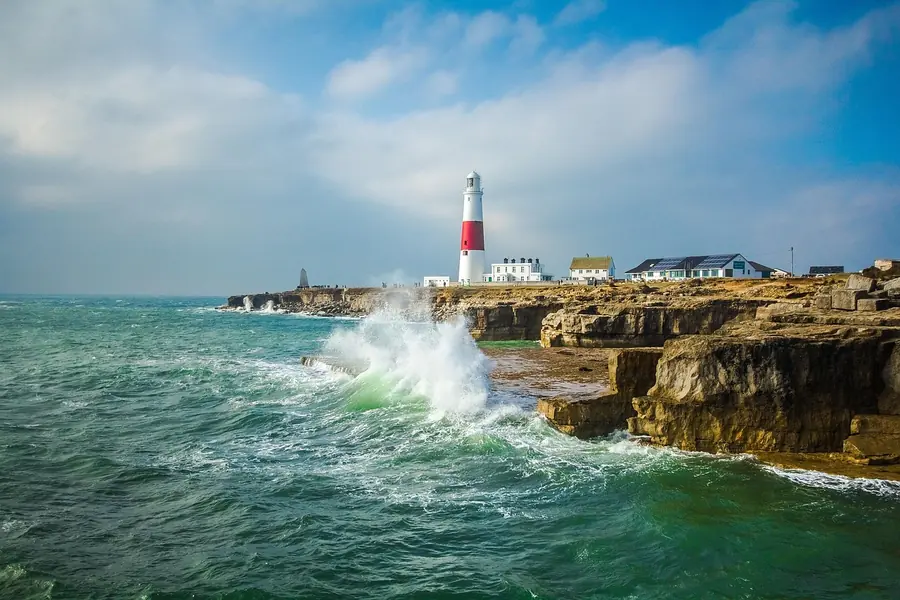
Up on Tophill, around Easton and Weston, roofs catch the wind straight off the Channel. Down in Underhill, Fortuneswell and Chiswell sit below the heights, but the old Portland stone cottages there often carry slate roofs and tall stone stacks that have seen a lot of winters. Along the Weymouth seafront, three and four storey terraces face the bay with little shelter. In a strong blow, ladders and roof ladders are simply not safe, and a sensible roofer will tell you so and come back the moment it eases.
What you can do in the meantime is keep an eye on the street side. If a chimney pot is rocking, a run of ridge tiles has gone, or slates are coming off over a pavement, keep people clear and report it. Dorset Council handles this through its building control team, and its page for reporting a dangerous structure gives the office-hours and out-of-hours numbers.
It also helps to look at the forecast rather than guess. The Met Office guide to its weather warnings explains what yellow, amber and red mean, and a warning that lifts at 3am tells you when it’s realistic for someone to be on site. If you want to know why the wind finds the same weak spots each time, our earlier post on how wind damages Weymouth roofs goes through it.
What a roofer can make safe on the day
Once the wind drops, a lot can be done in a single visit, even in drizzle.

The usual options are:
- A heavy tarpaulin over the damaged area, run over the ridge where possible and held with timber battens so the wind can’t get under it. A flapping sheet does more harm than good, so the fixing matters more than the sheet.
- A temporary patch where a few slates or tiles are missing: a spare slate slid into place, a sheet of lead or aluminium, or flashing tape over a split, as a stopgap only.
- Pushing slipped slates back and holding them with temporary clips.
- Lifting off loose ridge tiles or a cracked chimney pot before they fall, and stacking them safely to go back later.
- Clearing a blocked valley or gutter that has been sending water over the top and into the wall.
None of this is meant to last a winter. A tarp on a Portland roof will take a hammering in the next blow and needs checking, and tape on lead has a short life. Ask the roofer to tell you plainly what was done, what’s temporary and how long it should hold.
What has to wait for a dry, calm spell
Some work just can’t be done properly in the wet, and a roofer who insists on doing it anyway is storing up a second call-out.
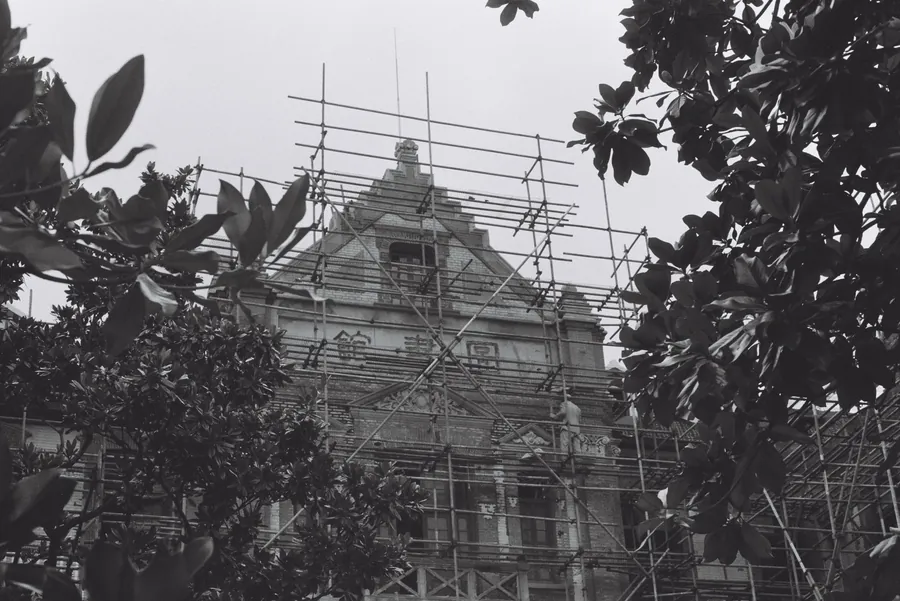
Ridges and verges bedded in mortar need dry weather and no frost, or the mix washes out of the joints or gets frosted before it has gone off. Felt and liquid coatings on flat roofs need a dry surface to bond to. Stripping a big area of slate to replace battens leaves the roof open, so that’s planned around a settled forecast. Scaffold for taller houses near the harbour or along the Esplanade has to go up before anyone can reach the damage, and scaffolders stop in high winds too.
Matching materials takes time as well. A reclaimed Welsh slate in the right size, or a clay tile that hasn’t been made for decades, may not be on the van. This is where a well-fixed temporary cover earns its keep, because it lets the permanent job be done properly rather than quickly.
Second homes and holiday lets: sorting it from miles away
Plenty of the cottages and seafront flats around Weymouth and Portland sit empty for weeks at a time. Second homes are common enough in Dorset that the council has charged a 100% council tax premium on them since April 2025.
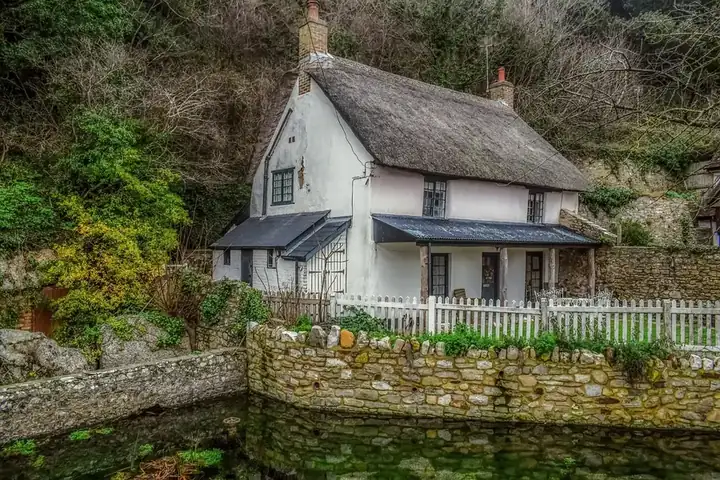
If you own one, a storm brings a particular problem: you may not know the roof has gone until a guest rings or a neighbour notices a stain on the ceiling. The owners who cope best have sorted the basics before the weather turns. Someone local holds a key, whether that’s a neighbour, the cleaner or the letting agent. The insurer’s claims number and the policy reference are saved in your phone, not filed in a drawer at the house. Whoever lets the roofer in knows where the consumer unit is. And you’ve already decided what happens to a booking if the back bedroom has a bucket in it.
Ask for photos of the damage before work starts and after the temporary cover goes on. That way you can see exactly what you’re agreeing to, pass the evidence straight to your insurer and plan the permanent repair without driving to Dorset to look at it.
What emergency roof work costs in Weymouth
There’s no single price for an emergency, because a make-safe on a bungalow at Littlemoor and one on a three-storey house overlooking the harbour are very different jobs.

As a rough guide, work that can be done from a ladder in one visit, such as a cover over a small area or a handful of slates refixed, sits in the same bracket as a small repair: about £150 to £400. Storm damage spread over a wider area runs from around £600 to £2,000. If scaffold is needed to get to the damage, that adds several hundred pounds on its own. Our roof repair costs guide for Weymouth and Portland breaks down each type of repair if you want the detail.
Two questions are worth asking up front. Is the make-safe priced separately from the permanent repair, or is it taken off the final bill? And will the price for the permanent work be put in writing before it starts? If the answer to the second one is vague, keep looking.
When to call your insurer
Ring the insurer early, ideally the same day, but don’t let a phone queue stop you protecting the house.

Most home policies cover sudden storm damage and exclude wear and tear, and most expect you to take reasonable steps to stop things getting worse. A temporary cover is exactly that. Keep the receipt, keep your photos and ask the roofer for dated photos and a written description of what they found, which is the kind of evidence insurers ask for. Then let the insurer agree the permanent repair before it goes ahead, so you’re not paying for work they later question.
If a claim is turned down, it’s worth knowing how disputes are judged. The Financial Ombudsman Service’s guidance on storm damage claims sets out three questions: was there a storm on the day, does the damage look like storm damage, and was the storm the main cause. It also says that an insurer relying on a wear-and-tear exclusion has to show that it applies. On an old roof that has been patched for years, that third question is often where things get argued, so the roofer’s honest report of what they found matters.
If the roof is leaking now, ring us and we’ll book the soonest slot we have. If the wind is still up, start with the buckets and the consumer unit. The roof can wait an hour; the ceiling might not.
Frequently asked questions
Can a roofer fix a leak in the rain?
They can usually stop it getting worse. A tarpaulin, a temporary patch or a slipped slate pushed back and held can go on in wet weather, provided the wind has dropped enough to work safely. The permanent repair, especially anything bedded in mortar, is better done once the roof has dried out.
Who do I call if part of a roof or chimney looks like it might fall into the street?
Keep people away from the area below and report it to Dorset Council as a dangerous structure. The council's building control team deals with these reports and has an out-of-hours number. Then ring a roofer to take down or secure the loose material.
Should I ring my insurer before or after the emergency repair?
Ring them as soon as you can, but don't sit and watch water come through the ceiling while you wait for a reply. Most policies expect you to take reasonable steps to stop damage getting worse. Keep photos, receipts and the roofer's written description, and agree the permanent repair with the insurer before it goes ahead.
I own a holiday let in Weymouth and live elsewhere. How does an emergency repair work?
Have someone local who can open up: a neighbour, a key holder or your letting agent. The roofer can send photos of the damage and of the temporary cover, so you can decide on the permanent repair and pass the evidence to your insurer without travelling down.
Want a roofer to take a look?
Free surveys and fixed written quotes across Weymouth, Portland and nearby towns.