
16 October 2026
Gutters, Fascias And Soffits In Weymouth And Portland: Salt, Gulls And Old Seafront Timber
Gutters, fascias and soffits in Weymouth and Portland: salt-rusted fixings, gull nests, rotten fascias, uPVC vs aluminium vs cast iron, and costs.
Gutters, fascias and soffits in Weymouth: why the roofline goes before the roof
On most Weymouth houses the slates will outlast the gutters, fascias and soffits by decades. That surprises people, but the roofline takes the worst of this coast. It sits right at the edge of the roof, where wind lifts it, rain runs over it and salt dries onto it, and nothing up there gets a rinse except the next shower. On the Esplanade the beach is just across the road from the front gutters, and on Portland nowhere is far from open water. In our experience a painted timber fascia that would go fifteen years inland can be rotten in eight or ten here, and galvanised brackets rust through on a similar clock.
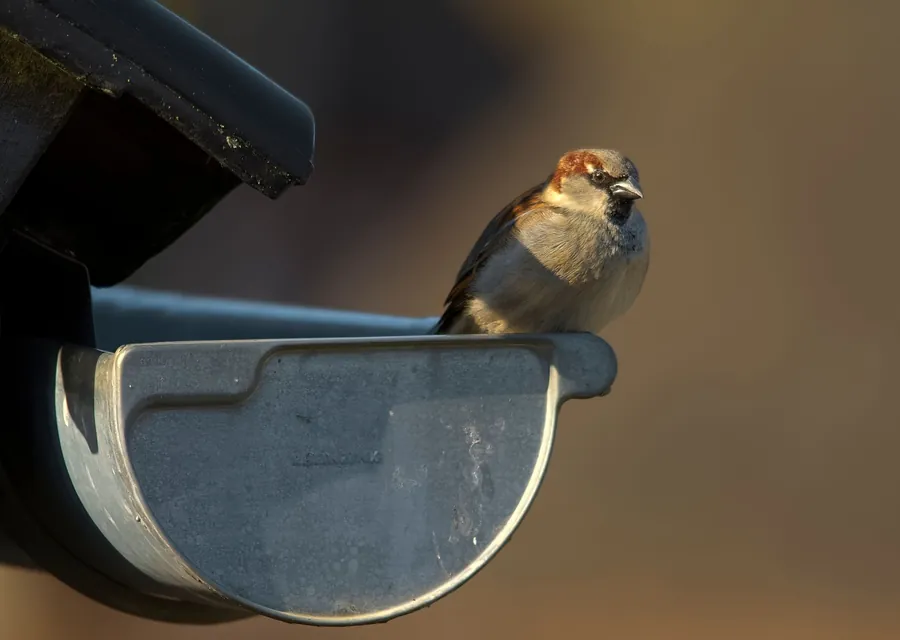
The three parts work as a set. The fascia is the board along the eaves that carries the gutter. The soffit closes the gap underneath it, back to the wall. The gutter takes everything that runs off the roof and passes it to the downpipes. If one goes wrong, the other two tend to follow. A blocked gutter overflows and soaks the fascia, the wet fascia lets go of its brackets, and the gutter sags and holds even more water. If you want to know what fixing all three looks like, our guttering, fascias and soffits service covers the lot, from unblocking one outlet to replacing the whole roofline.
How fast it fails depends on the house. So below we go through the main house types first, then the gulls, then materials and money.
Georgian seafront terraces: parapets, hidden gutters and timber rotting from the back
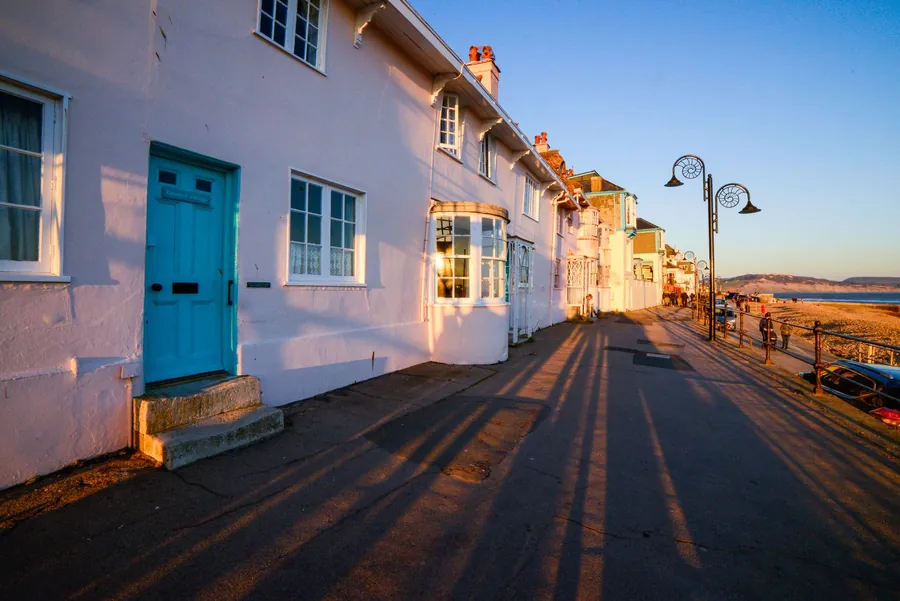
The long terraces facing the bay were mostly built between the 1780s and the 1850s, and many have parapets. From the beach you see a flat top edge. The gutter is hidden behind it, usually a lead-lined box or valley gutter running the length of the roof and draining through the parapet into a hopper and downpipe.
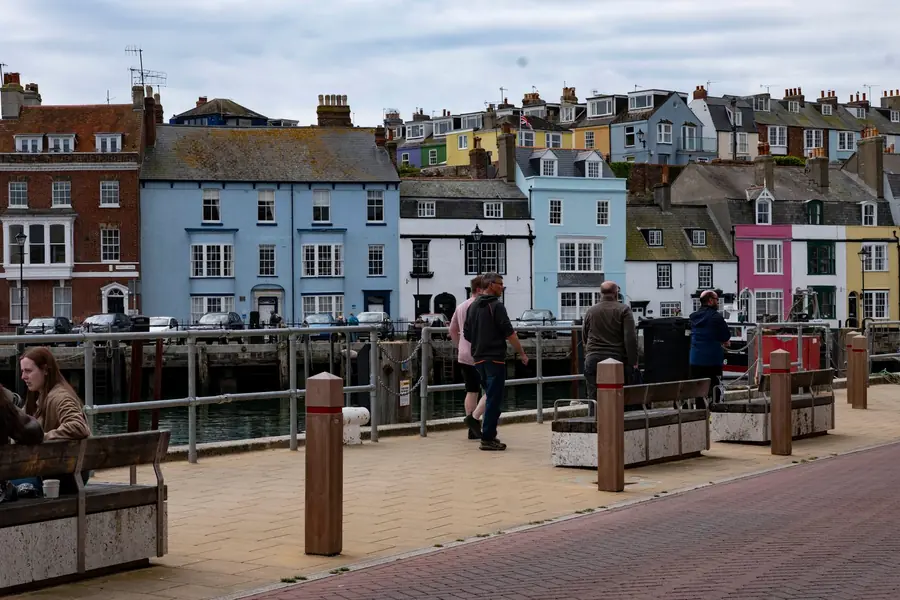
Hidden gutters give no warning. You can’t see a blockage from the street, so the first sign is usually a damp stain on a top-floor ceiling or water down the inside of a front wall. Gull feathers, nest debris and wind-blown sand build up behind the parapet over a summer, the outlet clogs, and in the first big autumn storm the box fills and spills back under the slates.
Where these terraces have an exposed eaves at the back, the fascia is often original timber or a later softwood replacement. It rots from behind, not from the front. The paint on the face can look fine while the back of the board, against the rafter ends, has been wet for years from a leaking gutter joint. A screwdriver pushed into the bottom edge tells you more than any amount of looking. If it sinks in, the board is done.
Most of these buildings are inside the Weymouth Town Centre conservation area, and many are listed in their own right. That matters when anything gets replaced, which we come back to further down.
Victorian and harbourside streets: ogee cast iron and the fixings that fail before it
Behind the seafront, and round the old harbour towards Hope Square, the housing turns later and plainer: Victorian and Edwardian terraces, many in brick or render, with open eaves and gutters you can actually see. A lot of them still have their original cast iron. On the fronts that’s usually ogee profile, the moulded shape that sits flat on the fascia. Half-round on brackets is more common at the back.

Cast iron itself copes with salt air surprisingly well if it’s kept painted. The trouble is everything holding it up. Ogee gutters are screwed straight through into the fascia, and on most houses those screws were replaced at some point with zinc-plated steel, which rusts quickly in coastal air. The screw heads blow, the gutter drops at one end, and water starts running back down the fascia instead of along the gutter. Half-round gutters sit on iron or galvanised brackets that corrode where they meet the timber.
The other weak spot is the joints. Cast iron sections are bolted together with a sealant between them. When that dries out, the joint weeps, and the dribble stains the wall below and keeps the fascia wet at that spot. A weeping joint in October is a rotten fascia board within a couple of winters.
Repair is often the right call here. Re-bolting joints with fresh sealant, swapping rusted fixings for stainless steel ones and repainting can keep a cast iron run working for decades more.
Portland’s stone houses and the wind across the island
Portland is a different job again. A lot of the older houses in Fortuneswell, Easton, Weston and Southwell are built of Portland stone, often with short eaves and little or no timber fascia at all. The gutter may sit on iron brackets driven straight into the stonework or into the wall plate.
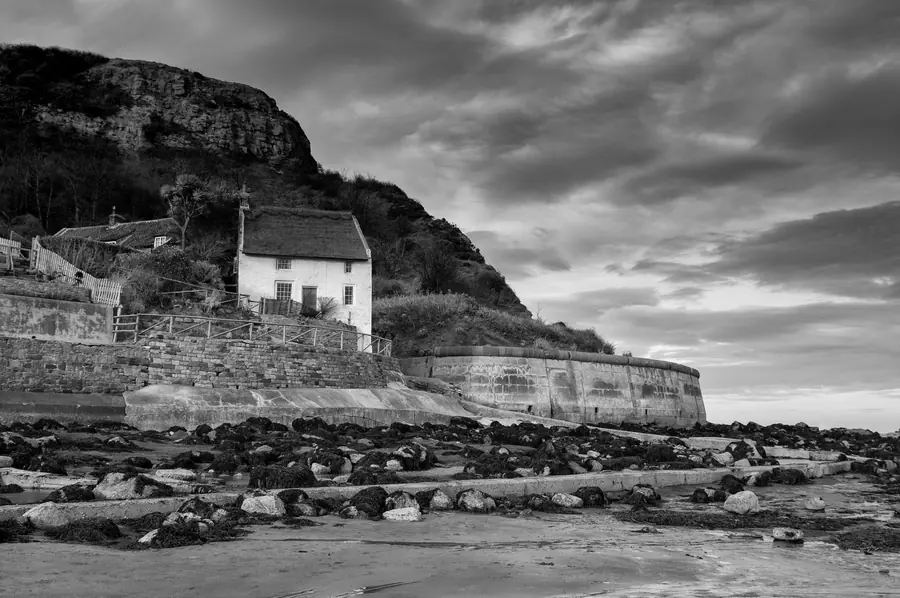
The wind is the big factor. The island sticks out into the Channel with nothing to slow a south-westerly down, and a gutter that is slightly loose on a sheltered street in Dorchester will get worked loose completely on Portland. Long straight runs on exposed gable walls are the ones that come away first. Downpipes rattle on their clips, the clips work out of the joints, and a pipe that has come away from the wall throws water straight onto the stone.
People underestimate this bit. Portland stone is a limestone, and constant water from a leaking joint or an overflowing gutter will stain it, grow algae on it and, over many years, erode the surface. So on the island we tend to spend more on fixings than on the gutter itself: stainless brackets set into sound joints, and extra brackets on the windward runs. More downpipes, if needed, too.
Many of Portland’s older village cores are conservation areas as well, so the same rule applies as in Weymouth: check before changing the look of anything visible from the road.
Herring gulls: nesting season and what you’re actually allowed to do
Anyone who has lived in Weymouth through a summer knows the gulls. Herring gulls nest on roofs across the town and the island, and they like the flat bits: valley gutters, parapet gutters, the flat strip behind a chimney and the corner where two roof slopes meet.

A gull’s nest is a pile of grass, seaweed, twigs and rubbish, and in a gutter or outlet it acts like a plug. Add a season of droppings and feathers and you have a blocked gutter that nobody can safely reach for months. The birds get very protective once there are eggs or chicks, and a roofer on a ladder near an active nest can get hit.
The law doesn’t leave much room either. The government’s guidance on wild bird protection is clear that it’s an offence to take, damage or destroy a nest while it’s being built or used, and gulls are no exception. In practice nests start going up in April and May and the young are usually gone by late August. So the sensible pattern is:
- Clear the gutters and outlets in late August or September, once the roof is empty
- Fit deterrents over the winter: spikes on ridges and chimney tops, wire or mesh guards over outlets and hoppers, and netting across flat areas that attract nests
- Check in March, before the birds come back, that the guards are still in place
Mesh gutter guards help with debris but need fixing properly in this wind. A loose guard ends up on the lawn after the first gale.
uPVC, aluminium or cast iron for a Weymouth or Portland house
Once a roofline is past repair, you have three realistic choices. None of them is perfect by the sea.
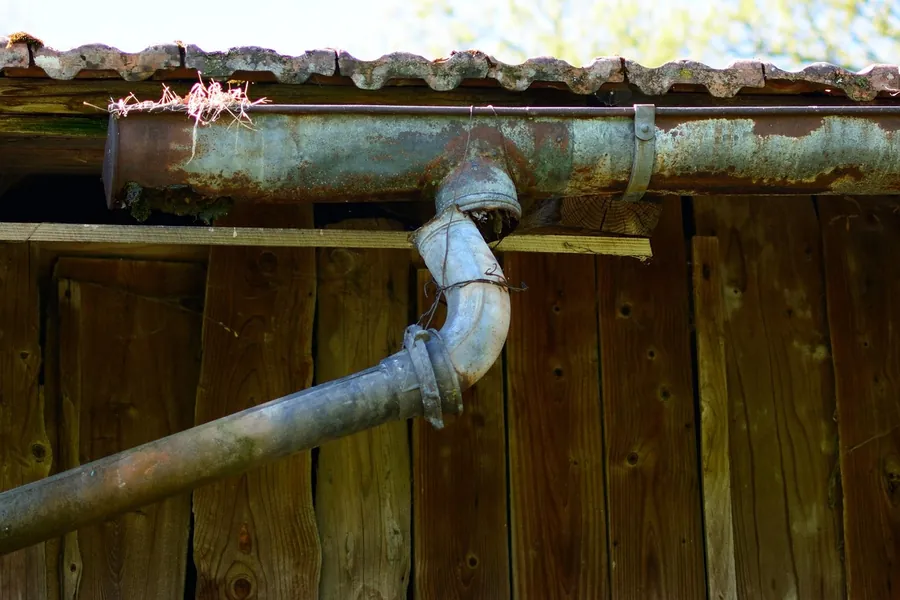
uPVC
Cheapest to buy and fit, and it doesn’t rust. That makes it a sensible choice for the postwar and newer houses around Littlemoor, Preston and Southill, where it’s what is already there. Its weak points are sunlight and wind. Plastic gutters go brittle and fade over 20 to 30 years, and the clips holding them can snap in a gale. On a terrace that still has cast iron next door, a plastic run also stands out.
Aluminium
Seamless or sectional aluminium, powder-coated, is the in-between option. It’s light, it doesn’t rust like steel, and a good coating handles salt air well, although cheap uncoated aluminium can pit near the sea. Profiles made to look like ogee or half-round cast iron are available, which makes it a reasonable choice for older houses that aren’t listed. Expect it to last 40 years or more.
Cast iron
Heavy and very long-lived. A properly painted cast iron system can last over a century. It needs repainting every five to seven years on the coast, and rust caught early is easy to deal with. On listed buildings and many conservation-area streets it’s what the council expects to see.
Whatever you choose, ask what the fixings are. Stainless steel screws and brackets, ideally marine-grade A4, cost a little more and stop the most common coastal failure before it starts.
On conservation, Dorset Council lists 15 conservation areas across Weymouth and Portland. You can check whether your street is in one on Dorset Council’s Weymouth and Portland conservation areas page, and you can look up whether the house itself is listed on Historic England’s National Heritage List. Like-for-like repair rarely needs permission. Replacing cast iron with plastic on a listed building generally needs listed building consent. Our earlier guide to chimney repairs in Weymouth and Portland runs into the same conservation questions, and the advice there holds for gutters too.
Gutter and fascia costs in Weymouth and Portland, and why access decides the bill
The prices below are guide figures for a typical two-storey house. Treat them as a starting point. Every house is quoted on its own.
- Gutter clear and outlet check: around £80 to £200
- Re-sealing joints and refixing a sagging run: around £120 to £350
- New uPVC gutters and downpipes: around £500 to £1,200
- Full uPVC fascias, soffits and guttering on a semi: around £2,500 to £4,500
- Aluminium systems: often half as much again as uPVC, sometimes more
- Cast iron: the most expensive option, priced by the metre and by the number of fittings
What usually moves the price most is getting to it. A bungalow in Chickerell can be done from ladders and a tower. A three-storey Georgian house on the Esplanade needs a full scaffold, and if it stands on the pavement it needs a licence from Dorset Council. Hidden parapet gutters add time because of the lead. On Portland, the wind can stop work at height for days at a time in winter, so a job with a weather window built in is better than one rushed between gales.
Doing the roofline while a scaffold is already up for roof or chimney work saves paying for access twice, and that’s the single best way to keep the bill down. If your gutters are overflowing, your fascias are soft or the gulls have moved in, we’ll come and look, tell you whether it’s a repair or a replacement and put the price in writing.
Frequently asked questions
How often should gutters be cleared on a house in Weymouth or Portland?
Once a year is the minimum, and the best time is late August or September, after the gulls have finished nesting and before the autumn gales. Houses near trees, or with gulls on the roof every summer, often need a second clear in early spring.
Can I remove a gull nest from my gutter?
Not while it is being built or used. All wild birds, their eggs and nests are protected by law, and that includes herring gulls. Clear old nesting material once the young have left, usually by late August, and fit deterrents over the winter so the birds pick somewhere else next spring.
Do I have to use cast iron gutters in a Weymouth conservation area?
Not automatically. Like-for-like repairs are normally fine, and on an unlisted house the rules depend on the area and whether any Article 4 direction applies. On a listed building, swapping cast iron for plastic usually needs listed building consent. Ask Dorset Council's conservation team before ordering anything if you are unsure.
How much do new fascias, soffits and gutters cost in Weymouth?
As a rough guide, a full uPVC fascia, soffit and guttering replacement on a semi-detached house costs about £2,500 to £4,500. Gutters and downpipes alone run from about £500 to £1,200. Aluminium and cast iron cost more, and scaffold on a three-storey terrace can add several hundred pounds or more.
Want a roofer to take a look?
Free surveys and fixed written quotes across Weymouth, Portland and nearby towns.