
20 October 2026
Slate Or Tile For A Weymouth Or Portland Re-Roof?
Welsh or Spanish slate, fibre-cement, concrete or clay tile? How each covering copes with salt, Portland gales and conservation rules in Weymouth, with lifespans and prices.
A roof near the top of Portland sits close to 150 metres above the sea, with nothing to slow a south-westerly between it and the Atlantic. A few miles inland, a roof in the hollow at Upwey hardly notices the same gale. Both owners end up asking us one question once the old covering has had it: slate or tile? We’d love to say there’s a single right answer. There isn’t. It turns on three things you can actually check: what the rafters were built to carry, how hard wind and salt hit that particular slope, and whether Dorset Council has a view on what your street should look like. Weight alone settles a lot of it. Natural slate comes in at roughly 20 to 35 kg per square metre, concrete interlocking tile at around 50, and clay plain tile can reach 75. Then there are the 15 conservation areas spread across Weymouth and Portland. This guide takes each covering in turn and tells you where it earns its place.
Slate or tile on a Weymouth re-roof: start with the timbers
Before anyone opens a brochure, look at what’s on the roof now. The covering a house was built with tells you what its timbers were sized for.
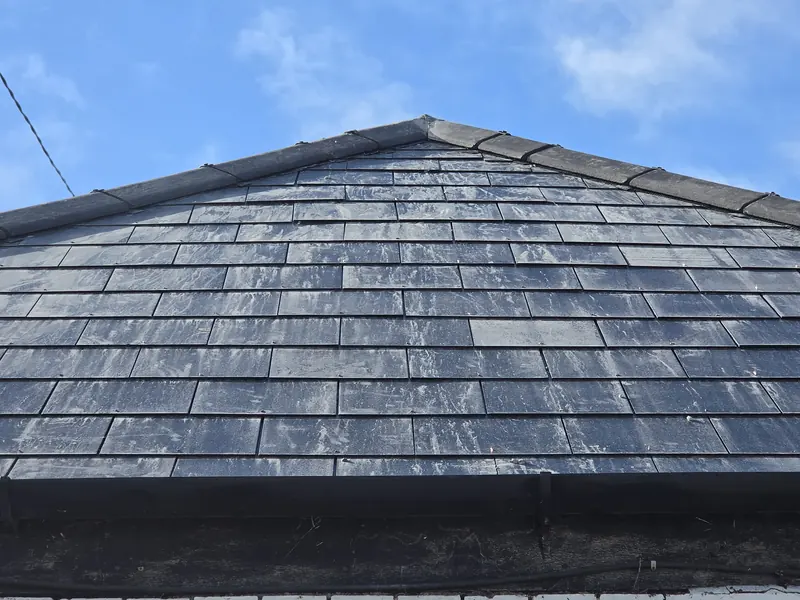
A Victorian terrace in Park District or a Georgian house off the Esplanade almost certainly went up with slate, and the rafters were cut to carry slate. Put concrete tile on that roof and you roughly double the dead load. The 1960s semi in Preston or Wyke went up with concrete tile, and its timbers were designed for that weight from day one.
Going lighter is rarely a structural problem. Going heavier is where you need care. The Planning Portal’s page on re-roofing and the Building Regulations says that where a new covering is significantly heavier or lighter than the old one, approval is likely to be needed and the structure may need strengthening. The rules for that sit in Approved Document A on structure, published on GOV.UK.
So a slated house going to concrete tile isn’t a straight swap. It’s a structural question first and a price question second. When we survey for a roof replacement in Weymouth, we look in the loft at the rafter sizes and spacing before we recommend any covering, because there’s no sense pricing a tile the roof can’t carry.
Natural slate: Welsh, Spanish and the codes on the pallet
Most of the older roofs in Weymouth and on Portland are natural slate, and a lot of the original stuff is Welsh. Welsh slate is hard, fine-grained and famously long-lived. Plenty of the roofs it went on in the 1800s are still keeping the rain out, usually on their second or third set of nails. It’s also the dearest option, and supply from the Welsh quarries is limited.
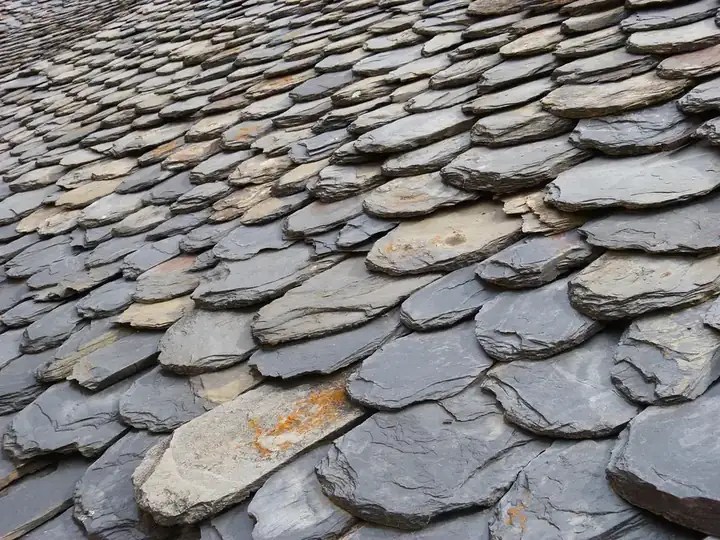
Most new natural slate fitted in Britain now comes from Spain. That isn’t a bad thing in itself. The best Spanish slate is excellent. The problem is that quality runs from superb to poor, and two pallets that look the same in the yard can behave very differently after twenty winters.
Reading the BS EN 12326 grades
Slate sold in the UK is tested under BS EN 12326, and three codes are worth asking about:
- The thermal cycle grade, T1, T2 or T3, is mostly about metallic minerals such as pyrite in the slate. T1 means no change, or harmless marks on the surface. T3 means those minerals can rust right through, leaving stains and, in time, holes.
- W1 is the best water absorption grade. A slate that soaks up less water has less in it to freeze.
- S1 is the best result in the sulphur dioxide exposure test.
Ask for the quarry’s name and its Declaration of Performance. If a quote just says “Spanish slate” and nothing else, you have no idea what’s going on your roof. On a house this close to the sea we wouldn’t fit anything below T1 and W1.
Salt doesn’t do much to a good slate. It attacks what holds the slate on. That’s a question for further down this page.
Fibre-cement slate: the light, cheaper stand-in
Fibre-cement slates are man-made from cement and fibres, pressed flat and coloured to look like slate. They weigh about 20 kg per square metre, lighter even than most natural slate, and every one is the same size and thickness, which makes them quick to lay.
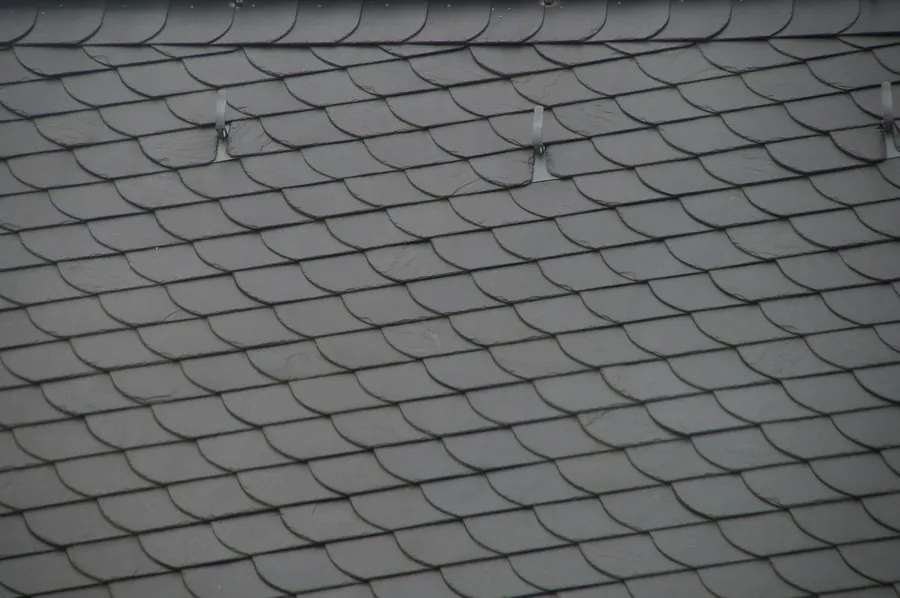
They have one fixing detail that matters a lot on this coast. Each slate goes on with two nails plus a copper disc rivet through the tail, the bottom edge that wind tries to lift. Skip the rivets and the tails flap and snap. On a Portland roof that would be a short-lived roof.
The lifespan is where we’d ask you to read the small print. Makers claim life expectancies of 50 to 60 years for their better slates, but the guarantees we’ve seen tend to run to 30 years on the structure and 20 on the colour. Colour is the giveaway with ageing fibre-cement. The surface fades and holds moss, and a 25-year-old roof often looks it.
We like them on rear extensions, garages, and postwar houses that want a slate look without slate weight or slate prices. We’re less keen on the front of a Georgian terrace. The edges are thin and the finish is flat, and anyone who knows roofs can tell from the pavement.
Concrete interlocking tiles on the estates
Drive round Littlemoor, Preston or the newer streets of Chickerell and concrete interlocking tiles are what you’ll mostly see. They’re big, they lock into each other along the sides, and a roofer can cover a lot of roof in a day with them. That’s why they’re the cheapest full re-roof most people will be offered.
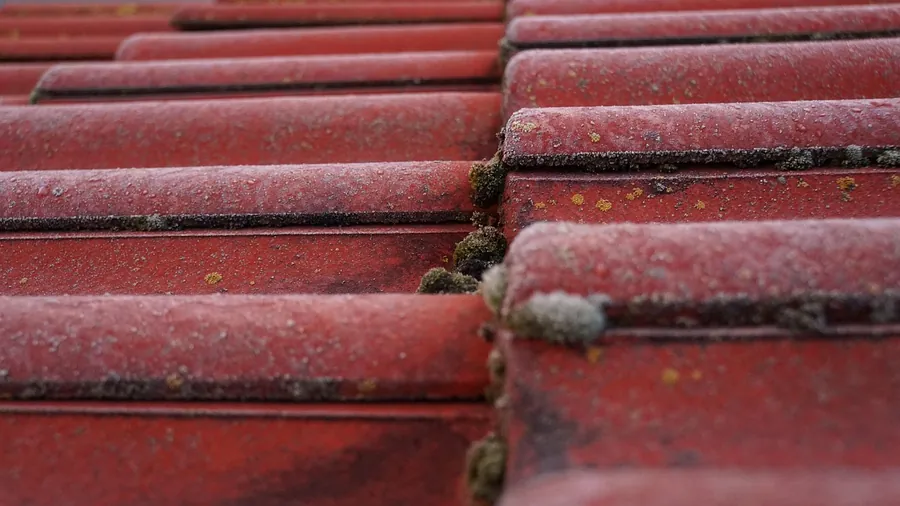
Weight is their drawback. At around 50 kg a square metre, they need a roof built for them. That’s fine on a house that already has them, but it’s no good on a Victorian roof framed for slate.
They don’t mind salt much. Concrete is inert enough, and what fades over the decades is the surface finish, not the tile’s strength. The tile isn’t the weak point on the coast. The clips and nails are. Since BS 5534 was revised in 2014, every single-lap tile on a new roof has to be mechanically fixed, and mortar can’t be counted on to hold anything down against the wind. On an exposed Weymouth street that means a lot of clips, and they should be stainless steel or a corrosion-resistant alloy rather than plain galvanised.
Expect 35 to 60 years from a concrete tile roof that’s been laid properly. On our price list, a full re-roof of a two-up two-down terrace in concrete tile runs from £7,000 to £10,000, scaffold, waste and VAT included.
Clay plain tiles and pantiles
Clay is the covering people forget to ask about, and there’s not a huge amount of it locally compared with slate and concrete. But there’s some, on older cottages, farm buildings and outbuildings, and a few newer houses use clay to look the part.
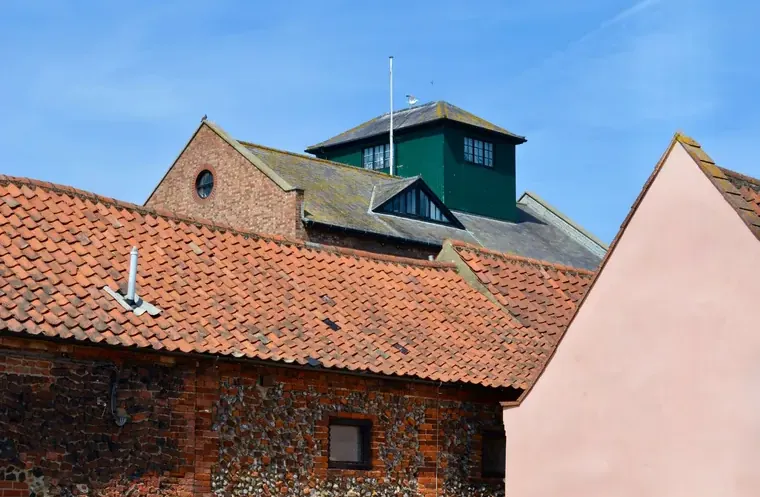
Plain tiles are the small, flat, double-lapped kind. Because each one is overlapped by two courses above it, there’s a lot of tile on the roof, so they’re heavy, at roughly 60 to 75 kg per square metre. They also need a steep pitch, 35 degrees or more, so you can’t put them on a shallow roof built for interlocking tiles. Pantiles are the S-shaped single-lap tiles you see on some Dorset cottages. They’re much lighter than plain tiles and happy on a lower pitch.
Fired clay doesn’t care about salt, and its colour goes all the way through, so it weathers rather than fades. A well-made clay roof can run 60 to 100 years. The catch is labour. Plain tiles take far longer to lay than big interlocking tiles, and handmade ones cost a good deal more than machine-made. On a three-bed semi, clay or concrete tile sits in our £9,000 to £14,000 band, with handmade clay pushing to the top of it.
Portland, Chesil and the seafront: fixings for the exposure
Here is the part that matters most in this town, whichever covering you pick. Under BS 5534, a new roof gets a fixing specification worked out for its own site, using the postcode, the height above sea level, the lie of the land and how far it is from the coast. Two houses ten minutes apart can end up with very different specs.
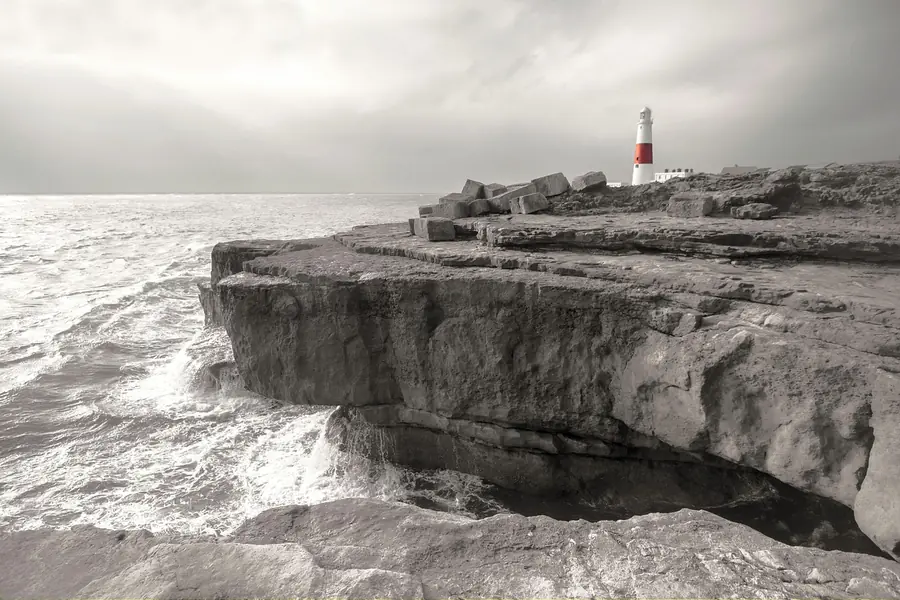
The exposure around here isn’t the same everywhere. Tophill on Portland rises to about 150 metres and takes the prevailing south-westerlies with nothing in the way. Wyke Regis and the houses along the Chesil end face the same weather coming over Lyme Bay. The Esplanade is different again. It looks east across Weymouth Bay, so the seafront catches the spray when the wind goes round into the east. Then there’s Upwey, Broadwey and the back of Preston, which sit in comparative shelter and usually need a lighter spec.
What the spec asks for depends on the covering:
- Natural slate goes on with two nails per slate, and on this coast they should be copper or stainless steel. Some roofers use stainless slate hooks instead, which hold the tail down well in wind.
- Fibre-cement needs its two nails and a copper disc rivet on every slate, with no exceptions near the sea.
- Concrete and clay single-lap tiles each need at least one mechanical fixing, with extra clips at the eaves, verges and ridge, and dry-fixed or mechanically fixed ridges and hips.
- Clay plain tiles are nailed to a pattern set by the spec, and on an exposed slope that means more of them are nailed.
None of the coverings is wind-proof on its own. A heavy tile resists lifting partly through weight, while slates rely on more fixings per square metre. The calculation works that out for your roof. Ask any roofer quoting near the sea whether their price is built on a manufacturer’s fixing spec for your postcode. If they look blank, keep looking.
What Weymouth and Portland conservation areas expect
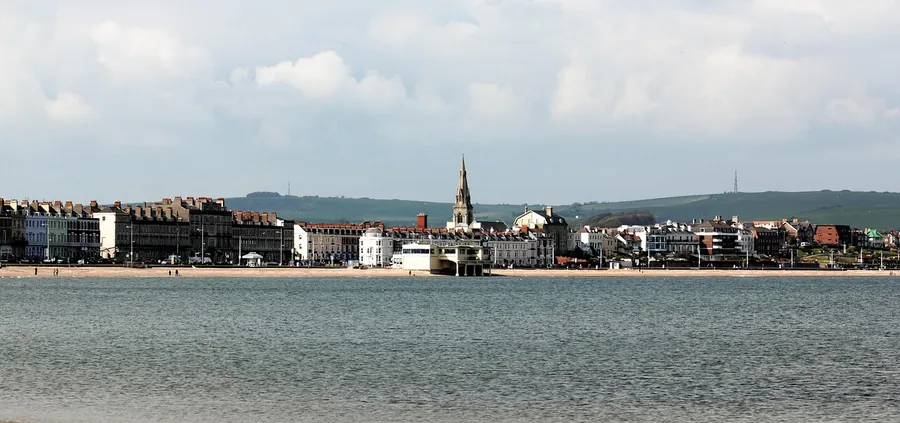
Dorset Council counts 15 conservation areas across Weymouth and Portland. They include most of Weymouth town centre, Wyke Regis, Lansdown Square in Rodwell, and seven on Portland: Grove, Easton, Reforne, Straits, Wakeham, Underhill and Weston. If your house is in one of them, your choice of covering may not be entirely yours.
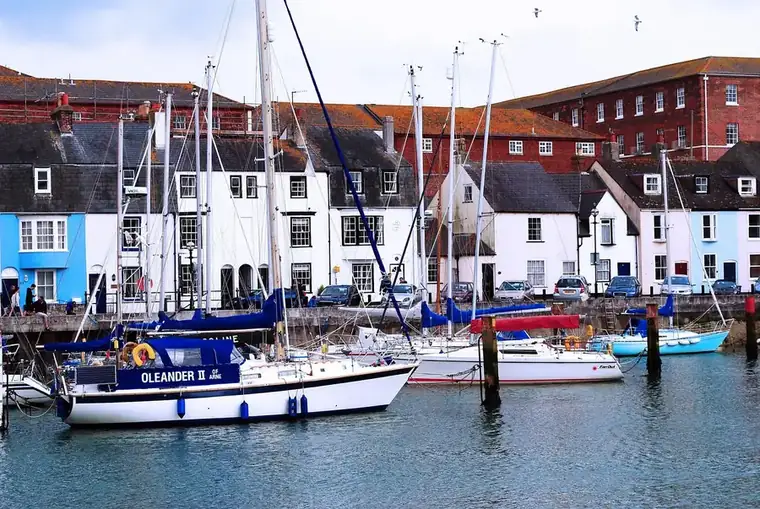
In practice, the pattern is simple enough. Where a street was slated, the council will normally expect slate back on the slopes the public can see. Natural slate of a matching size and colour goes down well. Reclaimed Welsh slate is often the best match on a Georgian or Victorian roof. Swapping slate for concrete tile on a front slope is the kind of change that draws objections, and fibre-cement often meets resistance for the reasons above. Listed buildings need consent for a change of material, and sometimes for like-for-like work too, so don’t assume.
Wyke Regis is a good example of how much these areas cover. The Dorset Heritage Explorer record for the Wyke Regis Conservation Area links to dozens of listed buildings along Portland Road, High Street, Chamberlaine Road and All Saints Road. On Portland, several listing descriptions for houses in Fortuneswell record slate roofs, and at least one has stone slates kept along the eaves.
We’ve written a full guide to planning permission for roof work in Weymouth and Portland, so we won’t repeat it all here. The short version is to check with the council before you order slates.
Lifespan and cost per roof, side by side
Here’s the whole comparison in one place. Weights are approximate laid weights. Lifespans assume good material, a proper fixing spec and decent workmanship. Prices are from our own guide for a full re-roof including scaffold, waste and VAT.
| Covering | Approx. weight | Typical lifespan | Our price guide | Where it suits |
|---|---|---|---|---|
| Welsh slate | 20-35 kg/m² | 100 years or more | Top of the slate band or above | Listed and conservation-area front slopes |
| Spanish slate (T1, W1) | 20-35 kg/m² | 75 years or more | Semi: £11,000-£17,000 | Older terraces and most slated houses |
| Fibre-cement slate | About 20 kg/m² | Guarantees often 30 years | Usually between tile and natural slate | Extensions, garages, rear slopes |
| Concrete interlocking tile | About 50 kg/m² | 35-60 years | Terrace: £7,000-£10,000 | Postwar and newer houses built for tile |
| Clay plain tile | 60-75 kg/m² | 60-100 years | Semi: £9,000-£14,000, more if handmade | Steep roofs, cottages, matching neighbours |
On a typical semi the gap between concrete tile and natural slate is smaller than people expect, roughly £2,000 at the bottom of our range and £3,000 at the top. That’s because the covering is only part of the bill. Scaffold, membrane, battens, fixings and labour cost much the same whichever covering goes on top. Spread that gap over the extra decades a good slate should last and slate often comes out ahead, as long as the timbers can take it and the house suits it.
If you’re not yet sure the old roof needs replacing at all, read our guide to whether to repair or replace an ageing roof in Weymouth and Portland first. For prices broken down by house type, there’s our guide to what a new roof costs in Weymouth.
When we survey, we’ll tell you what your rafters can carry, what the council is likely to want, and what fixing spec your postcode needs. Then we can price two coverings side by side so you can see the difference in writing.
Book a free survey and get slate and tile priced side by side
Frequently asked questions
Can I swap the slate on my Weymouth house for concrete tiles?
Sometimes, but check two things first. Concrete interlocking tiles weigh roughly twice as much per square metre as natural slate, so a roof framed for slate may need its rafters checked or strengthened, and a big change in weight is likely to need Building Regulations approval. And if the house is listed, or in one of the conservation areas around Weymouth and Portland, the council may expect slate to go back.
Is Spanish slate good enough for a house near the sea?
Good Spanish slate is. Ask for a slate graded T1 and W1 under BS EN 12326, from a named quarry, and fixed with copper or stainless steel. Salt air does little to a sound slate. The fixings are what suffer near the sea, so the nails or hooks matter as much as where the slate came from.
Are fibre-cement slates allowed in a conservation area?
There's no blanket ban, but they are often resisted on slopes the street can see, because they look flatter and more uniform than natural slate. On a listed building you will need consent for a change of material. Ask Dorset Council before ordering anything, and keep fibre-cement in mind for rear slopes, extensions and garages.
Which roof covering lasts longest on Portland?
Natural slate and clay tile have the longest lives, often well beyond 60 years, but on Portland the fixings decide how long a roof really lasts. Whatever covering you choose, ask for a fixing specification worked out for your postcode under BS 5534, with stainless steel or copper fixings throughout.
Want a roofer to take a look?
Free surveys and fixed written quotes across Weymouth, Portland and nearby towns.