
30 October 2026
Slipped Slates And Missing Tiles In Weymouth And Portland: Causes, Fixes And 2026 Costs
Why slates slip and tiles go missing on Weymouth and Portland roofs, how to spot it from the ground, tingles vs re-nailing, and what each repair costs in 2026.
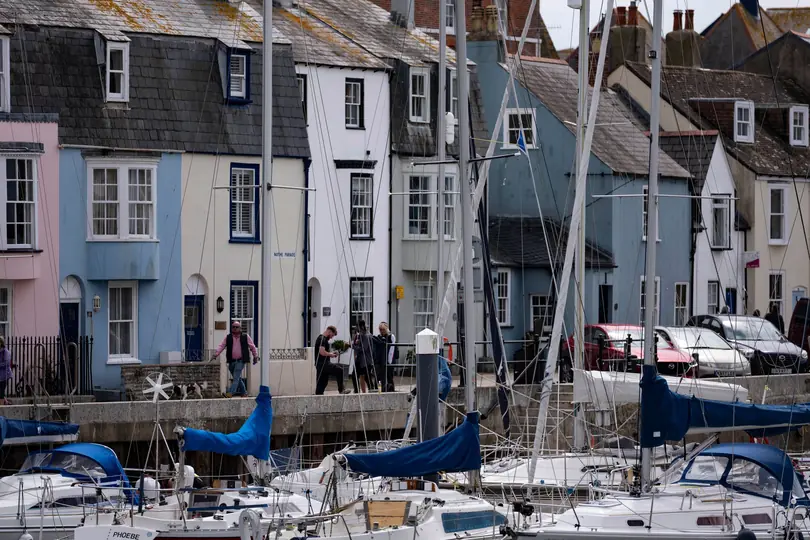
When a slate lands on the patio, or a tile turns up in the front garden after a blow, most people in Weymouth and Portland ask the same thing first: is this a £200 job or the start of a new roof? Usually it’s the first. A handful of slipped slates or tiles that can be reached from a ladder costs about £150 to £400 to put right. The odds shift on the island and along the seafront, where wind does most of the damage. The Met Office’s Portland station records mean wind speeds roughly 54% above the UK average, and the late-Victorian terraces of Park District are well over a century old, many still hanging on their original iron nails. This guide covers why slates and tiles let go on this stretch of coast, what you can see from the pavement, the difference between a quick fix and a lasting one, and what each repair costs in 2026.
What the slate or tile in your garden is telling you
Pick it up before you throw it in the bin. The piece that came down is the best clue you’ll get without a ladder, and it often tells us whether we’re looking at one slate or a whole slope.
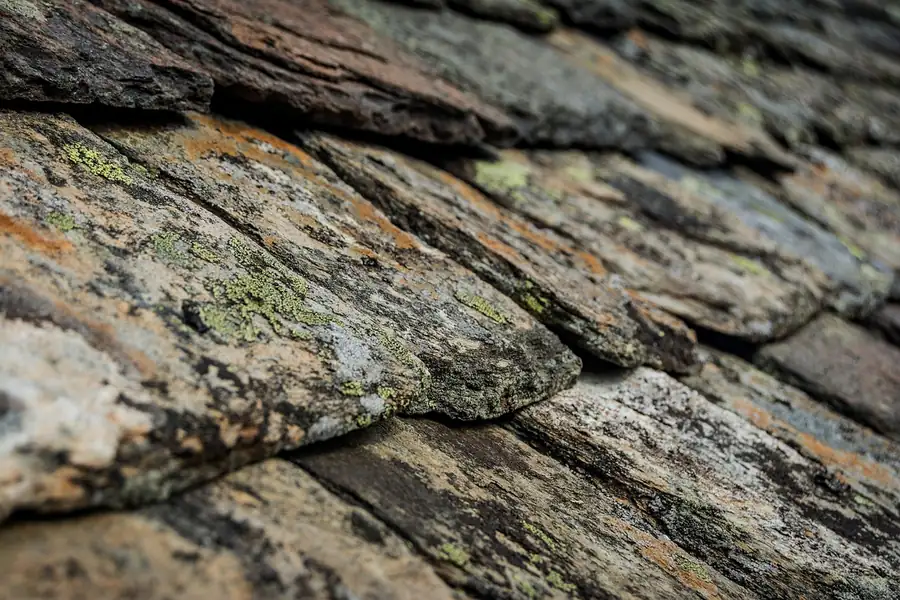
Look at the nail holes on a slate. If both holes are still there and intact, with rust staining round them, the slate didn’t break. The nails rotted through and it slid out. That’s nail sickness, and the other slates fixed with the same nails on the same day are on the same clock.
If the slate has snapped across one of the holes, or a corner has gone, it was more likely knocked or levered off by wind getting under the tail. That can be a one-off, especially on a corner or verge.
A concrete tile with a broken nib (the lug on the back that hooks over the batten) has usually been stood on, or the nib has crumbled with age. A tile that is whole but has lost its grip points to a batten that has gone soft or a nail that was never there in the first place. Plenty of older tiled roofs were only nailed every few courses.
Bring the piece, or a photo of both sides, when you call. It saves time on the first visit, and our roof repairs team can often tell you on the phone whether it sounds like a single slate or a fixing problem across the roof.
Why slates and tiles let go around Weymouth and Portland
Each of the causes below shows up across the country. What’s different here is how many of them pile onto the same roof.

Nail sickness on old slate roofs
Victorian slaters fixed with iron nails, sometimes galvanised, sometimes not. Iron rusts at the point where it passes through the slate and into the batten, which is exactly where you can’t see it. Once the shank thins out the slate hangs by friction alone, and a frost, a hot day or a gust is enough to send it down the roof. Salt in the air on this coast speeds that rust up, which is why we fix with copper or stainless steel nails and never plain galvanised.
Wind uplift on exposed roofs
On Portland, especially at Tophill, Weston and Easton, and on the seafront terraces facing the bay, gusts can come straight in off open water. Wind passing over a roof pulls up on the slope behind the ridge, and the slates nearest the edges and ridge take most of it. Head-nailed slates, fixed near the top, have a long lever arm for the wind to work against. Centre-nailed slates are held much closer to the middle and resist uplift far better, which is one reason we centre-nail on exposed roofs.
Perished torching
Before roofing felt existed, many roofs had lime mortar pressed up under the heads of the slates or tiles from inside the loft. It’s called torching. It keeps out draughts and wind-blown rain and stops the slates rattling. After a hundred years it dries, cracks and drops onto the loft floor in crumbs. Without it, slates on an unfelted roof can lift and chatter in a gale until the nails let go. If you’ve got sandy, grey grit along the top of the loft insulation, that’s probably your torching.
Frost and age on concrete tiles
Weymouth sees fewer hard frosts than inland Dorset, so frost is rarely the main culprit here. It does still finish off old concrete tiles. Once the surface has worn away the tile soaks up water, and a cold snap can split it or snap the nib. More often, though, a cracked concrete tile on one of the postwar estates traces back to someone walking on the roof to fit an aerial or a satellite dish.
Spotting slipped slates and tiles in Weymouth from the pavement
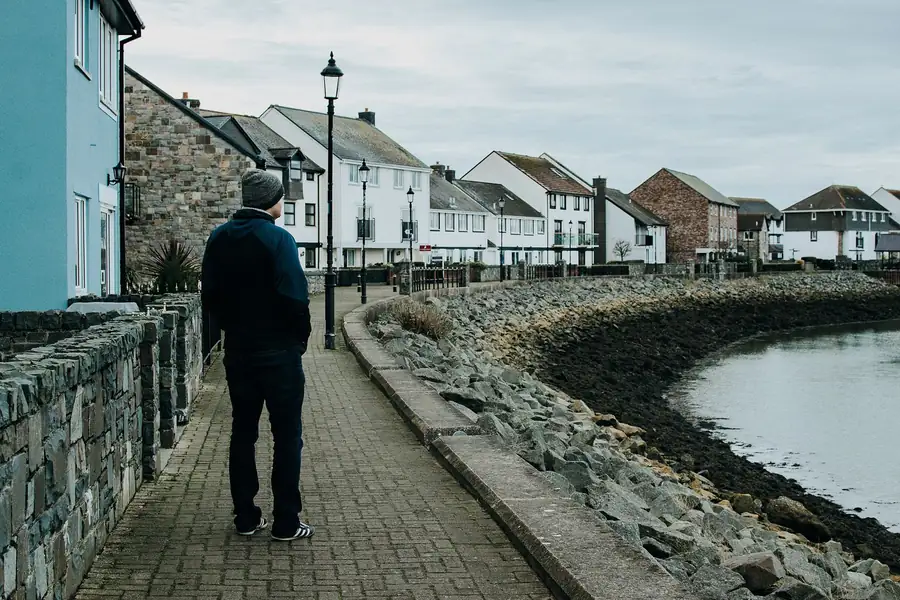
You don’t need to go up to find out whether you have a problem, and you shouldn’t. Stand across the road on a bright day, ideally with a pair of binoculars, and work along the roof slowly.
Here is what to look for:
- A slate sitting lower than its neighbours, with a lighter grey stripe above it where the slate underneath now shows
- A dark gap or a glimpse of felt, membrane or timber batten
- Lots of thin metal strips at the bottom edges of slates, which means old tingles from past repairs
- A tile sitting at a slight angle or proud of the line
- Bits of slate or tile in the gutter, or a single slate wedged behind the gutter at the eaves
- Rust streaks running down the face of the slates below a row of nail heads
Then go into the loft with a torch. Pinpricks of daylight, damp patches on the felt or boards, wet insulation and crumbs of lime are all worth noting. Take photos from the street and in the loft. They make a quote far more accurate.
If slates are already down and the forecast is grim, our guide to what to do in the first hours of a roof emergency in Weymouth and Portland covers getting a temporary cover on before the weather turns.
Tingles and slate hooks: the quick fix and where it stops
A slate is nailed at the top, under the two courses above it. You can’t reach those nails to put a new slate back without lifting the slates above, so the standard repair is to secure the replacement from below instead.
The roofer cuts out the old nails with a slate ripper, then fixes a tingle (a narrow strip of metal) to the batten through the gap between the two slates beneath. The new slate is slid up into place and the end of the tingle is folded up over its tail to hold it. A slate hook does the same job with a pre-formed stainless steel hook, and it’s neater.
Lead tingles were the traditional choice, and on this coast they’re a poor one. Lead is soft, and wind working at the tail of the slate can bend it open until the slate slides out again. Copper or stainless steel holds its shape. On Portland and the seafront we use stainless hooks for exactly that reason.
The Institute of Historic Building Conservation’s advice on caring for slate and stone roofs treats tingles as a temporary measure and recommends replacing rusted iron nails with copper or stainless steel. We agree. A tingle is right for the odd slate on a roof that is otherwise sound. It does nothing for the nails holding the rest of the slope.
The proper repair: re-nailing, with reclaimed slate to match
When slates have slipped in a cluster, or the same patch keeps shedding them, the lasting fix is to take that area back to the battens and lay it again.
We strip from the slipped area up to the ridge or to a sensible break, set aside every slate that is still sound, and check the battens. Soft or split battens come out. On an unfelted roof we fit a breathable membrane under the new battens. The slates go back on with copper or stainless nails, and on an exposed slope they’re centre-nailed. What you end up with is a section of roof that will outlast the rest of it, not a patch.
Matching the slates
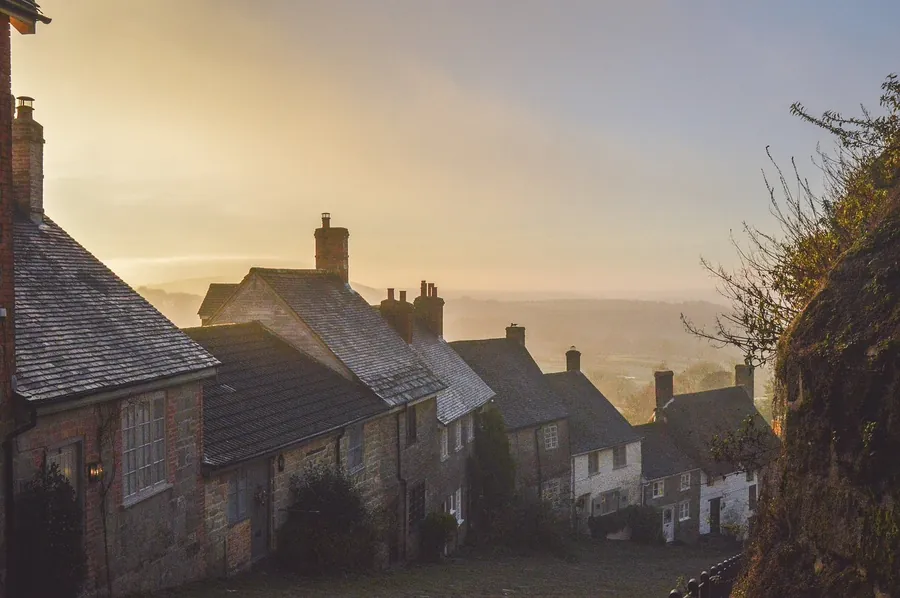
Most Victorian houses in Weymouth were roofed in Welsh slate, in sizes that still have their old names: Duchess (24 x 12 inches), Countess (20 x 10) and Ladies (16 x 8). Reclaimed Welsh slate in those sizes is still fairly easy to come by, so a repair can be made to blend in. We match on size first, then thickness, then colour, and tap each one before it goes on. A sound slate rings. One that thuds is delaminating, and it goes in the skip.
Some of the older Portland cottages and outbuildings have stone or odd-sized slates that take more searching. If you’re in a conservation area or the house is listed, a like-for-like repair in matching material is what Dorset Council would normally expect, and reclaimed slate makes that straightforward.
Concrete tiles
Concrete interlocking tiles come in a handful of profiles, and several common ones have been discontinued. If yours is one of those, a reclaimed match is usually the answer. On a rear slope, we can sometimes borrow sound tiles from a hidden spot and put a close modern match there instead.
When slipped slates mean the Portland or Weymouth roof is done
There’s a point where patching costs more over five years than relaying would cost once. You can usually see it coming.
The signs that the fixings have failed across the whole roof, not just in one spot:
- Slates slipping on more than one slope, and on the sheltered side as well as the windward one
- A dozen or more old tingles already showing, with new slips between them
- Battens that crumble or snap when a section is opened up
- No felt at all, with the torching gone from most of the loft
- Slates that flake, crack or thud when tapped, so few could be reused
Two or more of those and we’ll price a strip and relay of the affected slopes alongside the repair, so you can compare the two figures. On a Welsh slate roof, relaying is often cheaper than people expect, because a good share of the original slates can go straight back on. We go through that decision in more depth in our post on whether to repair or replace a roof in Weymouth and Portland.
Anyone working up there has to plan for it properly, too. The Health and Safety Executive’s guidance on roof work notes that almost one in five construction deaths involve work on roofs, and that sloping roofs need scaffold or edge protection at the eaves for anything longer than a short job. That’s why a full slope needs scaffold, and why the price jumps once a job goes past a few slates.
What slipped slate and tile repairs cost in Weymouth and Portland in 2026
These are our typical ranges for 2026, including VAT. They sit within the wider figures on our roofing costs page. Access moves the price more than the slates do.
| Job | Typical 2026 cost |
|---|---|
| A few slipped slates or tiles refixed or replaced from a ladder | £150 - £400 |
| Each extra slate or tile on the same visit | £20 - £40 |
| Several cracked concrete tiles swapped for reclaimed matches | £150 - £450 |
| Patch stripped and re-nailed, new battens and membrane (around 2-4 m²) | £500 - £1,200 |
| Tower needed to reach the damage | add £150 - £350 |
| One slope of a two-storey terrace stripped and relaid, slates reused, scaffold included | £3,500 - £6,500 |
A slipped slate on a bungalow at Littlemoor sits at the bottom of these ranges. The same job on the third storey of a seafront house, or on a cottage in Fortuneswell where the scaffold has to be carried up a steep lane, sits at the top or beyond. Heavily exposed roofs on Portland also tend to need hooks rather than tingles, which adds a little to each slate.
One thing that saves money: when we’re up for one slipped slate, we check the rest of that slope while the ladder is there and tell you what we’ve found. Paying for one visit that fixes five slates is cheaper than paying for five visits over two winters.
Frequently asked questions
How much does it cost to fix slipped slates in Weymouth?
A few slipped slates or tiles that can be reached from a ladder usually cost £150 to £400 to put right, with each extra slate on the same visit adding roughly £20 to £40. Stripping out a small patch and re-nailing it with new battens and membrane runs from about £500 to £1,200, and relaying a whole slope of a terrace, scaffold included, is typically £3,500 to £6,500.
Is a tingle a proper repair for a slipped slate?
A copper or stainless tingle is an accepted way to hold one replacement slate where the nails can't be reached without stripping the course above. It's fine for the odd slate. It isn't a cure for nail sickness, and lead tingles in particular tend to open out in strong wind, so on an exposed roof we use copper or stainless steel hooks instead.
How many slipped slates before the roof needs relaying?
There's no fixed number, but the pattern matters more than the count. Slates slipping across every slope, a roof already covered in old tingles, rotten battens or crumbling torching in the loft all mean the fixings have failed everywhere. At that point a strip and relay, reusing the sound slates, is usually better value than another round of patching.
Can I get matching slates for an old Weymouth roof?
Usually, yes. Most Victorian roofs in Weymouth are Welsh slate, and reclaimed Welsh slate in the common sizes is still available. We match on size, thickness and colour, and the sound slates from any section we strip are kept and reused. Older or odd-sized slates on some Portland cottages can take longer to source.
Want a roofer to take a look?
Free surveys and fixed written quotes across Weymouth, Portland and nearby towns.