
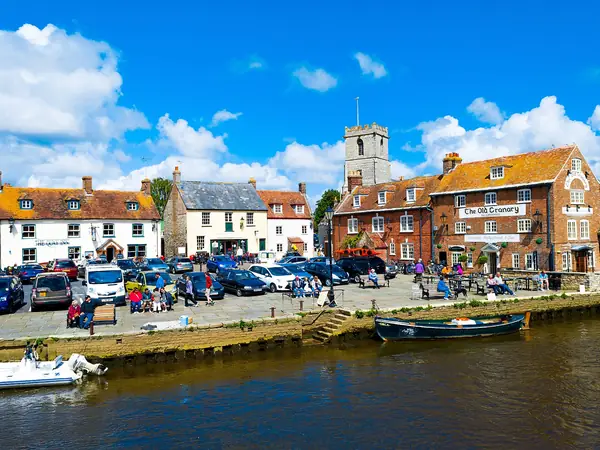
Wareham Quay
Historic quayside on the River Frome at the heart of Wareham, with riverside pubs and boat hire nearby.
Learn more about Wareham Quay on Google MapsRoof replacement in Wareham involves more homework than in most towns. Inside the Saxon walls, houses rebuilt in brick after the 1762 fire often have parapets, hidden gutters and the occasional older roof structure behind a newer face, and the whole centre sits in a conservation area with an Article 4 direction. Out along Westport Road the terraces carry Welsh slate, while the mid-century bungalows towards Stoborough are under clay or concrete tile that's now well into its later years. We survey the structure, talk through materials that suit the street, and give you a fixed price with a 10 year guarantee as standard.
Tell us a little about the roof and we will call you back.
A new roof should last generations. Here's how we approach replacements on Wareham's older brick buildings and newer houses alike.
01
On a Georgian terrace that means natural slate or clay tile to match the neighbours. On a bungalow outside the conservation area there's more choice, and we'll explain the trade-offs between each.
02
A re-roof is the time to put hidden gutters right. We renew the lead linings, check falls and outlets, and make sure the junction with the parapet wall is properly flashed.
03
With the old covering off, we can see every rafter and wall plate. On houses where the front is newer than the structure, this is often the first proper look anyone has had in a century.
04
Every slate or tile is fixed to suit the wind load, with ridges and hips mechanically fixed under BS 5534. That matters on a town that sat inside Storm Eunice's red warning area.
05
Renovating more than half a roof brings Part L into play, which usually means upgrading insulation. We build that into the plan and the price from the start.
06
Every full replacement normally comes with our 10 year guarantee, in writing, covering the workmanship on your new roof.
1,000+
Roofing projects completed
5★
Every review we have is five stars
10 yrs
Guarantee on roof replacements
Free
Roof surveys and written quotes
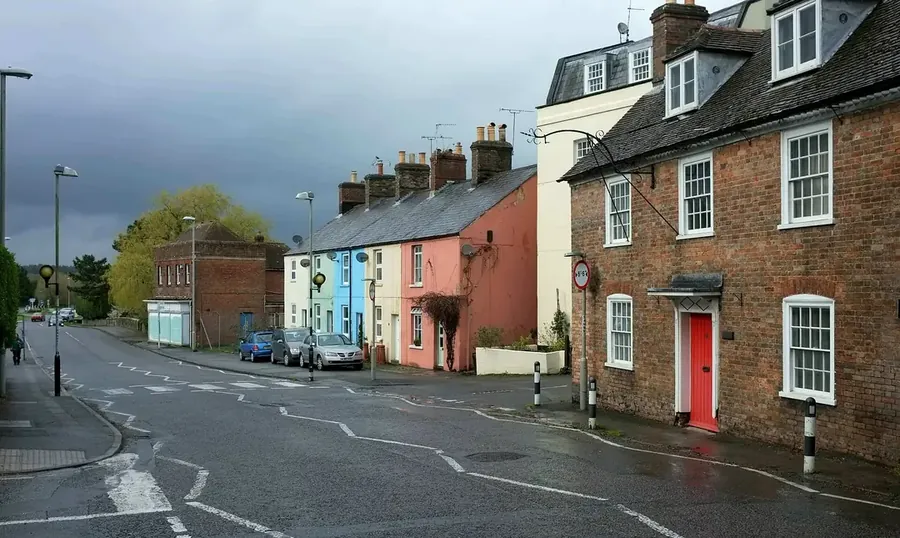
When more than half of Wareham's houses burned in 1762, rebuilding was overseen by commissioners under an Act of Parliament, and brick became the norm. The streets kept their Saxon lines, so plots stayed narrow and houses stayed tight together. For a re-roof, that means shared party walls, neighbouring roofs at different heights and a lot of lead at the joins. Getting those junctions right is most of the skill.
The roofs themselves vary more than people expect. The old workhouse is in Welsh slate, Streche's Almshouse in tile, and the terrace on Westport Road in slate again. Concrete tile turns up on later houses and bungalows. Wareham Conservation Area, designated in 1970, has an Article 4 direction, so if you're considering a different material from what's there now, we'll suggest checking with Dorset Council before you commit.
Not every tired roof needs replacing, and sometimes roof repairs in Wareham will buy you years for far less.
"On a lot of the Wareham town houses we re-roof, the timbers we uncover are plainly older than the Georgian brick at the front, and owners are often surprised."
We inspect the roof covering, the loft, the parapet gutters and the party walls. On older houses we're looking for signs that the structure pre-dates the front, since that changes how we plan the work.
We talk through slate, clay and concrete tile and what suits your street. If you're inside the conservation area and want something different from the existing roof, we'll suggest you check with Dorset Council first.
Scaffold goes up first, keeping a way through for pedestrians where it stands on the pavement. We sheet the scaffold and protect gardens, conservatories and neighbouring roofs before stripping begins.
Old slates or tiles, battens and felt come off in sections so the house is never left open to the weather. Sound slates can be set aside for reuse where you'd like that.
A breathable membrane goes down over the rafters, then new treated battens set to the right gauge. Valleys, flashings and parapet gutters are lined in new lead, dressed by hand to fit.
Slates or tiles are laid and fixed to suit the exposure, and ridges and hips are mechanically fixed. Any insulation upgrade needed under Part L is completed at the same stage.
We walk you through photos of each stage, take the scaffold down, clear the site and hand over your written 10 year guarantee, which comes as standard on every full replacement.
When we replace a roof in Wareham, the paperwork you're handed at the end will, on all but a handful of unusual jobs, include a 10 year guarantee on the work. If yours is one of the exceptions, you'll know at quote stage, not after. It names your address, says what was done and is dated the day we sign the roof off. It covers the installation itself, meaning the battens, membrane, fixings, the slates or tiles and the junctions where the roof meets walls and chimneys. If any of that lets water in through a fault in how it went on, we come back and fix it without charging you.
A guarantee that long only makes sense if the roof is built properly underneath, so it shapes the job from day one. Every slate or tile is mechanically fixed to the current British Standard rather than relying on its own weight, which matters on a stretch of coast where the wind arrives with nothing in its way. Breathable membrane goes on before the battens. Valleys, abutments and chimneys get proper lead or a tested dry-fix system, never a smear of mortar that cracks in its third winter.
Materials carry their own manufacturer cover on top, and that differs from product to product. Your paperwork says which one applies to your roof.
10
Year guarantee on roof replacements
1,000+
Roofing projects completed
In the town centre the existing roof usually points the way, but on bungalows and later houses there's more room to choose. This table sets out the main differences.
| Comparison point | Natural slate | Clay plain tile | Concrete interlocking tile |
|---|---|---|---|
| Expected lifespan | 80 years or more for good quality slate | 60 years or more | 40 to 60 years |
| Weight on the roof | Light | Heavy, needs sound timbers | Heavy |
| Minimum pitch | Generally 20 to 25 degrees, varies by size | Steep, usually 35 degrees and over | Low, some profiles to 15 degrees |
| Appearance | Traditional on Georgian and Victorian streets | Warm, textured, suits interwar houses | Practical, common on postwar estates |
| Relative cost | Highest | Mid to high | Lowest |
| Planning in conservation areas | Often the expected material | Acceptable where it matches | May not be accepted on older streets |
Full roof replacements in Wareham typically range from £7,000 to £20,000 or more. These are the things that move a quote up or down.
On North Street and South Street many houses front straight onto the pavement, so scaffold needs careful planning around shops and doorways. A bungalow at Stoborough with a drive is far simpler, and cheaper, to scaffold.
Natural Welsh slate costs more than clay tile, which costs more than concrete interlocking tile. In the conservation area, matching what's already there often rules out the cheapest option.
Relining box gutters behind a Georgian parapet adds lead and labour that a plain eaves gutter doesn't need. It's worth doing while the scaffold is up rather than paying for access again later.
If rafters or wall plates have rotted behind an older frontage, replacing them adds to the cost. Part L insulation upgrades, triggered when more than half the roof is renovated, are included in our quote.
Many town-centre houses were rebuilt or refaced in brick after the 1762 fire, and some have older structures behind their Georgian fronts. That can mean irregular timbers, party walls at different heights and parapet gutters, all of which we plan for at the survey stage.
Dorset Council is the planning authority. Like-for-like replacement generally doesn't need permission, but Wareham Conservation Area has an Article 4 direction and Stoborough has its own conservation area, so check with Dorset Council before changing the roof material in either. Listed buildings need listed building consent.
Natural slate typically lasts the longest, often 75 years or more, followed by clay tile. Concrete tile is cheaper and can last several decades, though usually not as long as slate or clay.
If more than half of the roof is being renovated, Part L of the Building Regulations normally requires the insulation to be brought up to current standards. We build that into the plan and the price.
Yes. Every full replacement normally comes with our 10 year guarantee, given in writing at handover.
Historic quayside on the River Frome at the heart of Wareham, with riverside pubs and boat hire nearby.
Learn more about Wareham Quay on Google Maps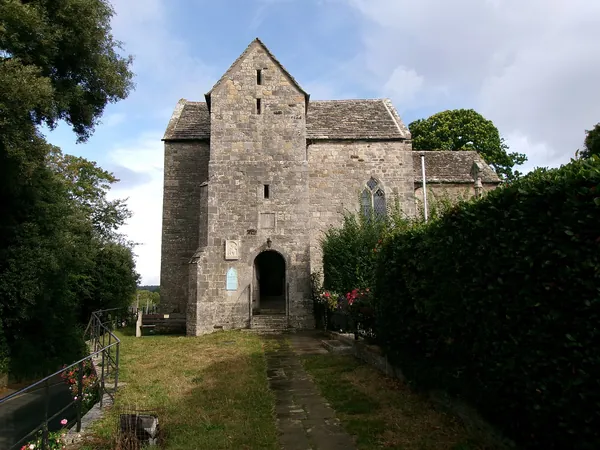
The most complete Anglo-Saxon church in Dorset, a Grade I listed building and scheduled monument on Wareham's town walls.
Learn more about St Martin's on the Walls on Google Maps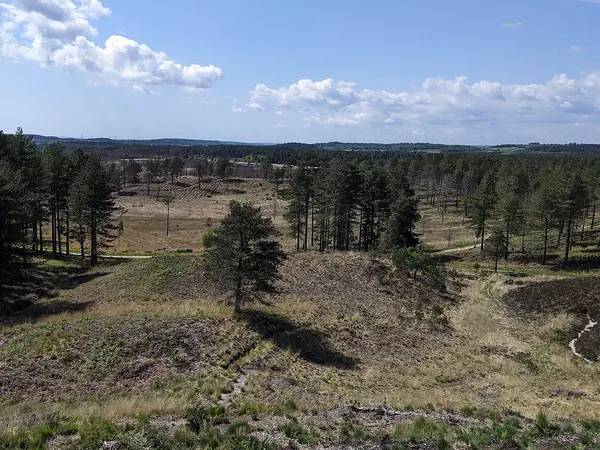
Forestry England heath and conifer plantation beside the A35, home to sika deer, Dartford warblers and sand lizards.
Learn more about Wareham Forest on Google MapsMore than a thousand roofing jobs finished, and every review customers have left us is five stars.
Those reviews are on their way onto this page. Until they land, ask us for photos of recent jobs near you in Wareham when we come out to quote - seeing a finished roof on a house like yours tells you more than any star rating.
Book a free survey and we'll look at the whole roof, explain your material options and give you a fixed written quote, with a 10 year guarantee as standard.